Enjoy Free Delivery - For all order over 5000 Rs

Understanding Fragrance Notes and Finding Your Signature Scent

The simple three-layer structure behind every great perfume, and how to use it to choose the one that will feel like yours.
Every perfume you have ever loved is built like a piece of music. It has an opening, a middle, and a lasting impression. Perfumers call these three stages top notes, heart notes, and base notes. Once you understand how they work together, choosing a fragrance stops being guesswork and becomes something much more personal.
The Three Layers of Every Perfume
Top Notes: The First Impression
Top notes are what you smell in the first five to fifteen minutes after you spray. They are made from small, light molecules that evaporate quickly, so their job is to grab your attention. Typical top notes include citrus fruits (bergamot, lemon, mandarin), light herbs (basil, mint), and sparkling green or aquatic accords. Top notes are important, but they are not the perfume, never buy based on the opening alone.
Heart Notes: The Character
Heart notes appear once the top has settled, around fifteen to sixty minutes after application, and they carry the perfume for the next two to four hours. This is where the real personality lives: florals such as rose and jasmine, spices such as cardamom and pink pepper, fruits, and warmer green notes. When people say a perfume smells like itself, they usually mean the heart.
Base Notes: The Lasting Memory
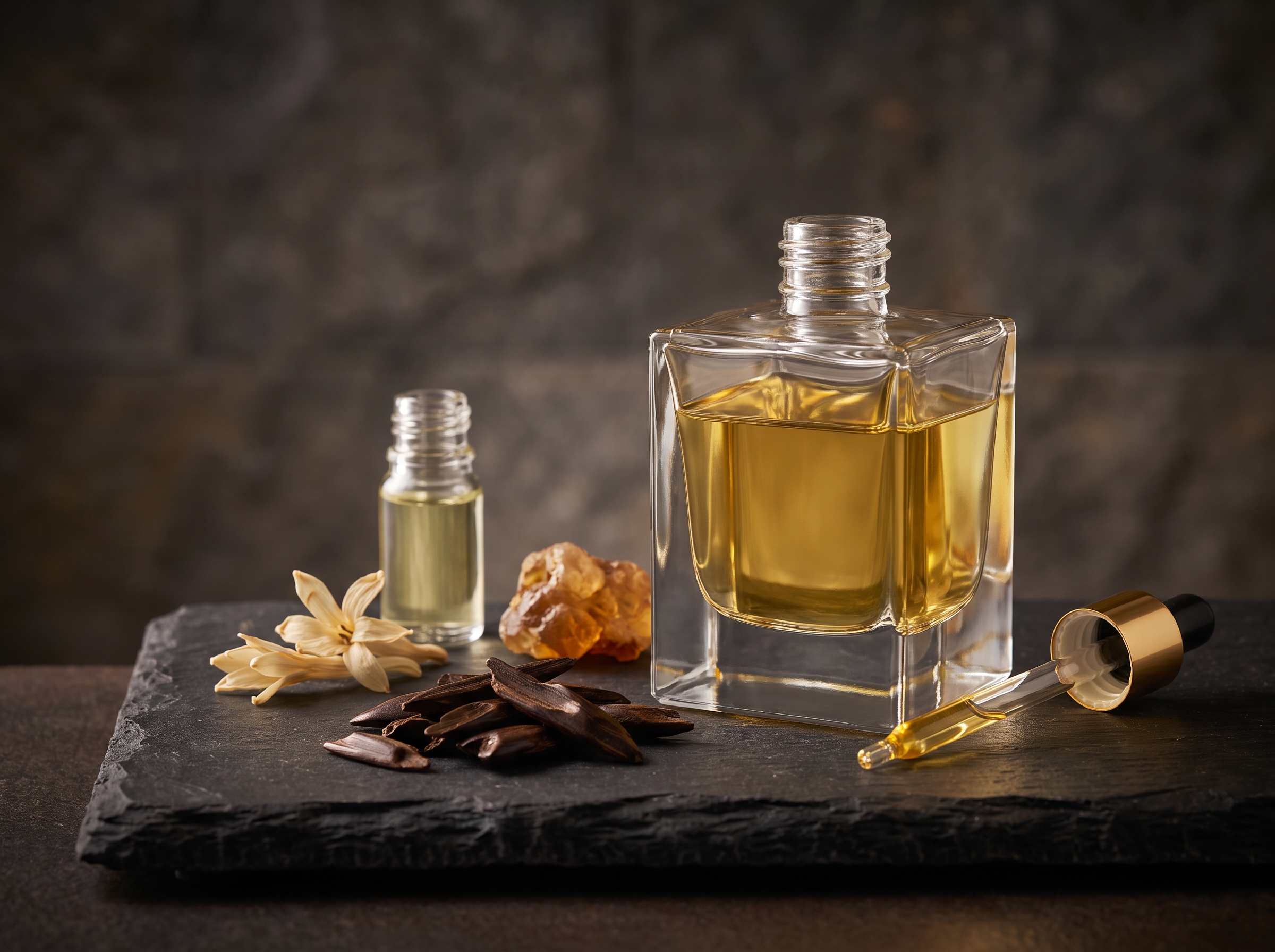
Base notes are heavy, slow-evaporating ingredients that stay on the skin for many hours. often overnight. They give the fragrance depth, warmth, and staying power. Classic base notes include sandalwood, cedarwood, vanilla, amber, musk, patchouli, and oud. The base is what people notice when they hug you at the end of the day.
How to Smell a Perfume the Right Way
- Spray once on the inside of your wrist or the crook of your elbow, never rub it in.
- Wait at least one full minute before you smell it. Give the alcohol time to evaporate.
- Smell it again after 30 minutes, this is the heart.
- Check again after four to six hours, this is the base, and the true test of quality.
- Only judge a perfume after you have experienced all three stages. Many people fall in love with a fragrance at the heart or base, not at the top.
Choosing Fragrances for Different Occasions
- Daytime and office: lighter compositions; fresh top notes, floral or green hearts, and a soft musky or woody base.
- Evening and special events: richer compositions; spicy or fruity hearts and warm bases such as amber, oud, or vanilla.
- Summer: citrus, aquatic, and green scents that stay light on warm skin.
- Winter: amber, resin, oud, and gourmand notes that bloom beautifully in cold air.
- Sport and travel: fresh, aromatic scents in Eau de Toilette strength that feel clean and energizing.
Finding Your Signature Scent
- A signature scent is not the most expensive perfume you own; it is the one that feels most like you. Finding it takes a little patience, but the process is enjoyable.
- Start with the family you already love. Look at your three favorite fragrances and identify what they share.
- Try samples on skin over a full day, never just a paper strip. Skin is the only honest test.
- Test only two or three fragrances at a time. Your nose gets tired quickly, and everything after the fourth spray starts to smell the same.
- Ignore the first blast. The opening lasts fifteen minutes; the perfume itself lasts all day. Judge the heart and base.
- Ask people close to you what they notice. Signature scents are as much about how others experience you as how you experience yourself.